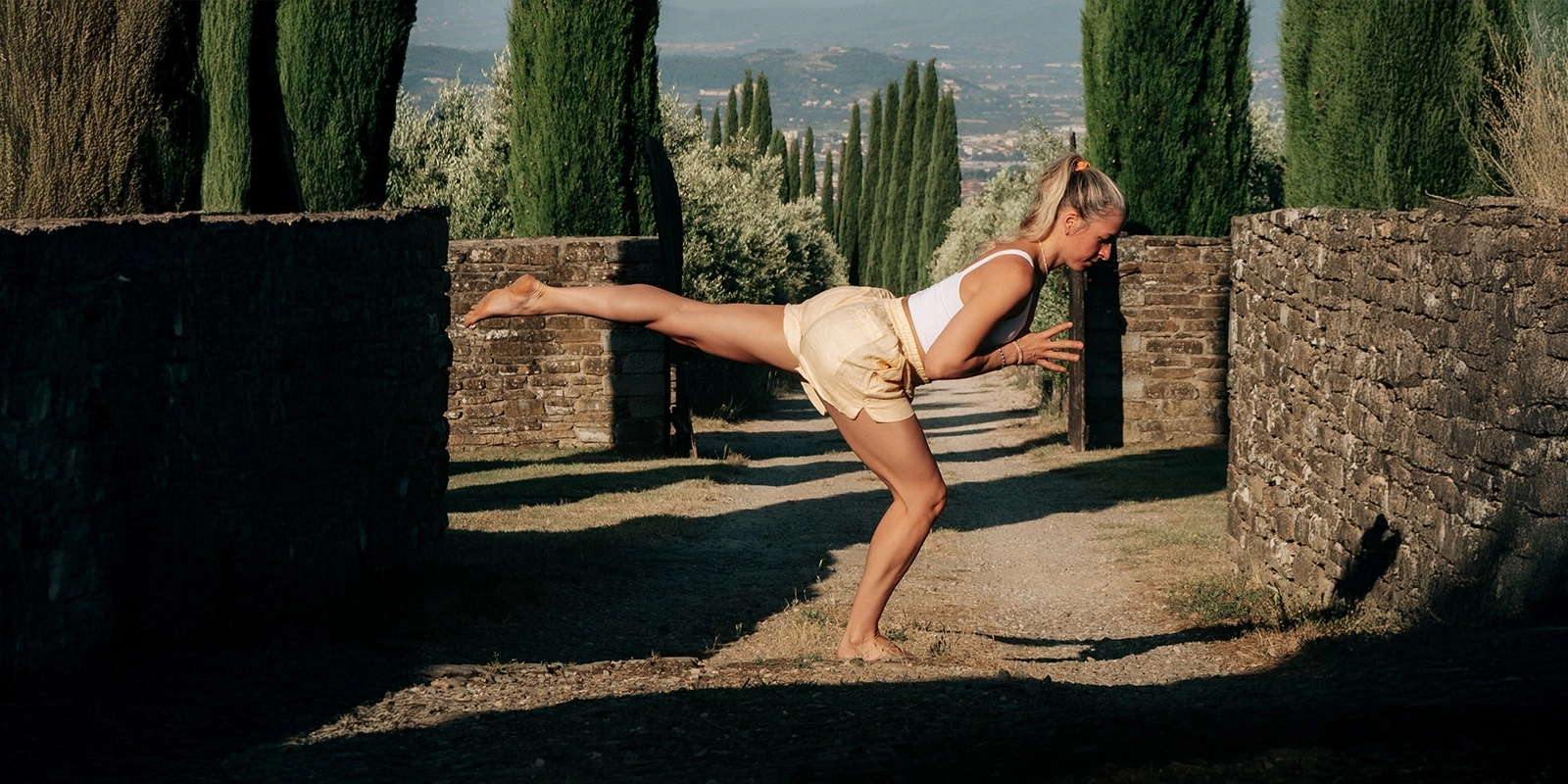
You’ve tied your shoelaces, glanced at your watch, and you’re almost out the door.
Then the question appears.
Should you spend a few minutes on your yoga mat first?
It’s a question we hear often from runners, particularly those looking to improve mobility, prevent niggles, or simply feel less stiff during the opening miles of a run.
The short answer is yes, yoga before running can be incredibly helpful.
But the longer answer is more interesting.
The type of yoga you practise matters far more than whether you practise yoga at all.
A short, dynamic flow can prepare your body beautifully for running. A long session of deep stretching can do exactly the opposite.
As a yoga teacher currently training towards a sub-3-hour marathon, I’ve experimented with both approaches over the years. What I’ve found mirrors what both research and experience suggest: the best pre-run yoga doesn’t try to increase flexibility. It prepares the body to move.
In this guide, we’ll explore when yoga before running helps, what to avoid, and a simple sequence you can use before your next run.
The Short Answer
Yes, yoga before running can be beneficial.
When approached correctly, it can:
- Improve mobility
- Increase circulation
- Activate key running muscles
- Enhance body awareness
- Support breathing efficiency
- Help you feel more prepared mentally and physically
The important distinction is that pre-run yoga should feel energising rather than relaxing.
Think movement.
Think activation.
Think preparation.
Not recovery.
Recovery comes later.
Why Dynamic Yoga Works Before a Run
Many runners treat warm-ups as something to rush through.
Others skip them entirely.
Yoga offers a different approach.
Rather than simply stretching a few muscles, dynamic yoga helps prepare the entire body for movement.
It Increases Blood Flow
Flowing movements gradually raise your body temperature and increase circulation to the muscles you’ll soon be using.
This helps your body transition more smoothly from stillness to movement.
It Improves Mobility
Running happens largely in a single plane of motion.
Yoga introduces movement patterns that running often neglects.
Gentle twists, lunges and lateral movements can help improve mobility around the hips, ankles and spine.
It Activates Stabilising Muscles
Short yoga flows naturally wake up the smaller muscles around the hips, knees and ankles.
These muscles play an important role in maintaining efficient running mechanics.
It Connects Breath and Movement
One of the most overlooked benefits of yoga is the way it reconnects you with your breathing.
If you’ve come straight from a desk, a busy morning, or a stressful day, a few minutes of conscious breathing can completely change how the first kilometre feels.
At Unite Yoga, we often see runners arrive at classes feeling mentally scattered and physically stiff. Five minutes later, they’re moving more freely and breathing more comfortably.
That transition matters.
What Should You Avoid Before Running?
Not all yoga works well before a run.
In fact, some forms of yoga are much better saved for afterwards.
Avoid Long Static Stretches
Deep stretches held for extended periods can temporarily reduce muscle power output.
Examples include:
- Long-held Pigeon Pose
- Yin Yoga
- Deep Forward Folds
- Extended passive stretching
These practices can be wonderful for recovery, but they aren’t ideal immediately before running.
Avoid Exhausting Yourself
The goal isn’t to complete a workout before your workout.
If your yoga session leaves you sweaty, fatigued or needing a rest before your run, you’ve probably done too much.
A good pre-run yoga routine should leave you feeling:
- Warm
- Alert
- Mobile
- Ready to move
Not tired.
Avoid Forcing Range of Motion
Before your body is warm, tissues are naturally less pliable.
There’s no need to force deep flexibility.
Gentle movement creates warmth.
Warmth creates mobility.
Let the process happen naturally.
The Best Yoga Poses Before Running
Keep these movements dynamic.
Move in and out of them rather than settling into long holds.
Downward Dog with Heel Pedals
A fantastic way to wake up the calves, hamstrings and ankles.
Pedal the heels slowly while maintaining length through the spine.
Low Lunge with Rotation
This opens the hip flexors while adding gentle thoracic mobility.
A useful combination for runners who spend much of their day sitting.
Dynamic Half Splits
Move slowly between Low Lunge and Half Splits.
This prepares the hamstrings without overstretching them.
Side Lunges
Running is largely forwards and backwards.
Side lunges introduce movement in a direction your body doesn’t often experience.
Thread the Needle
Great for upper-back mobility and arm swing mechanics.
Chair Pose
Chair Pose activates:
- Glutes
- Quads
- Calves
- Core
All essential players in efficient running.
A Simple 8-Minute Pre-Run Yoga Routine
You don’t need a full class.
You need enough movement to prepare your body.
Try this sequence:
Minute 1
Downward Dog with heel pedals.
Minute 2
Low Lunge with rotation (right side).
Minute 3
Low Lunge with rotation (left side).
Minute 4
Dynamic Half Splits.
Minute 5
Side Lunges.
Minute 6
Thread the Needle.
Minute 7
Chair Pose with slow breathing.
Minute 8
Stand tall and take five deep breaths.
Then go for your run.
Simple.
Effective.
Sustainable.
Should You Always Do Yoga Before Running?
Not necessarily.
The answer depends on the type of run you’re doing.
Easy Runs
A short flow works beautifully.
These sessions allow you to ease gradually into movement.
Long Runs
Many runners benefit from five to ten minutes of mobility work before heading out.
Particularly if the first few miles tend to feel stiff.
Speed Sessions
Keep yoga short and activation-focused.
Five minutes is often enough.
You still need plenty of energy for the session itself.
Race Day
Think movement rather than stretching.
A few dynamic poses can help settle nerves and prepare the body.
Avoid anything long or fatiguing.
Rest Days
This is where longer yoga practices can really shine.
Recovery sessions, mobility work and deeper stretching are often better suited to non-running days.
Yoga Before Running vs Yoga After Running
The question isn’t really which is better.
They’re simply useful for different reasons.
Before Running
Focus on:
- Mobility
- Activation
- Circulation
- Breath awareness
After Running
Focus on:
- Recovery
- Relaxation
- Flexibility
- Nervous system regulation
In many ways, post-run yoga is where the deeper work happens.
Both have a place.
Frequently Asked Questions
How long should yoga before running be?
Five to fifteen minutes is usually ideal.
You should finish feeling ready to run, not ready for a nap.
Can yoga improve running performance?
Indirectly, yes.
Improved mobility, body awareness, breathing and recovery can all support better running over time.
Is yoga before a race a good idea?
Yes, if it’s brief and dynamic.
Avoid long holds and deep stretching.
Can beginners do yoga before running?
Absolutely.
Simple movements and gentle flows are often more effective than complex poses.
What if I only have five minutes?
Five minutes is enough.
Consistency matters far more than duration.
Practical Takeaways
- Dynamic yoga works well before running.
- Long static stretches are better saved for afterwards.
- Focus on hips, calves, ankles, glutes and core.
- Five to fifteen minutes is plenty.
- Match the yoga to the run you’re about to do.
- Use movement to prepare the body, not exhaust it.
Most importantly, experiment.
Notice how your body responds.
The best routine is the one that consistently leaves you feeling ready to run.
Not Sure Where to Start?
Every runner arrives with different needs.
Some need mobility.
Some need recovery.
Others simply need help finding a routine that fits into real life.
That’s why we created the Unite Yoga Class Finder.
Answer a few simple questions and we’ll recommend the best classes based on your goals, experience level and current training.
Take the Free Unite Yoga Class Finder Quiz →
Recommended Classes
Morning Movement – Wake Up Your Hips
A steady, breath-led flow with Dan designed to open the lower body and restore ease. Ideal before an easy run when the hips feel stiff or sleepy.
A short 10-minute feel-good flow with Sara, designed to wake up the body through gentle stretching and soft movement. Perfect before a light run or active morning.
A 25-minute energising practice focused on opening the inner and outer hips with purpose and ease. Best suited to pre-run preparation on days when you have more time.
Further Reading
- Why Every Runner Needs Yoga
- Hip Mobility Exercises for Runners
- Yoga for Runners With Tight Hips
- Strength vs Mobility for Runners
About the Author
Dan is co-founder of Unite Yoga and currently trains towards a sub-3-hour marathon. Alongside teaching yoga professionally, he uses yoga, mobility work and breathwork to support running performance, recovery and long-term resilience.
Conclusion
So, should you do yoga before running?
For most runners, yes.
A short, dynamic yoga flow can help improve mobility, activate key muscles, connect you with your breath and make those first few miles feel noticeably smoother.
The key is keeping it simple.
You don’t need an hour.
You don’t need advanced poses.
You just need a few intentional minutes before heading out the door.
Roll out the mat before your next run, move through a handful of dynamic poses, and pay attention to how your body responds.
The difference might be greater than you expect.
Looking for a Complete Guide to Yoga for Runners?
This article is part of our Yoga for Runners series, a collection of practical resources designed to help runners improve mobility, recover more effectively and build a sustainable training practice.
For a complete overview, including guidance on recovery, mobility, injury prevention, marathon training and class recommendations, visit our pillar guide:
👉 Yoga for Runners: The Complete Guide to Running Stronger, Recovering Better and Staying Injury-Free
You can also explore:
- Why Every Runner Needs Yoga
- Yoga Before Running
- Best Yoga Routine After a Long Run
- Recovery Day Yoga for Runners
- Yoga for Tight Calves After Running
- Yoga for Runners With Tight Hips
- Hip Mobility Exercises for Runners
- Strength vs Mobility for Runners
- Yoga for IT Band Pain
- Yoga for Shin Splints
- Marathon Training and Yoga
Leave a Reply