You head out for a run feeling good, only to find that a few miles in something feels off.
Your hips feel restricted. Your stride feels heavy. Maybe there’s a familiar ache around your knee, shin or lower back that seems to appear every time your training volume increases.
At some point, most runners find themselves asking the same question:
Do I need to get stronger, or do I need to get more mobile?
It’s a reasonable question. Running culture often presents the two as competing priorities. Some coaches champion heavy lifting as the answer to everything. Others prescribe endless stretching, foam rolling and mobility drills.
The reality is far less dramatic.
As a yoga teacher currently training towards a sub-3-hour marathon, I’ve spent years moving between both sides of the conversation. There have been periods where I thought strength was the answer to every problem, and periods where I convinced myself another mobility routine would finally unlock the freedom I was looking for.
Neither turned out to be true.
The runners who move best, recover best and stay healthy longest tend to understand something important:
Strength and mobility aren’t opponents. They’re partners.
Let’s explore why.
What Do We Actually Mean by Strength and Mobility?
Before deciding which matters more, it’s worth understanding what we’re talking about.
Strength
For runners, strength is your body’s ability to generate and control force.
Every stride requires your body to:
- Absorb impact
- Stabilise joints
- Transfer force efficiently
- Propel you forwards
The key players include:
- Glutes
- Hamstrings
- Calves
- Core
- Hip stabilisers
When these muscles are strong, running feels efficient.
When they’re weak, something else compensates.
That’s often where niggles begin.
Mobility
Mobility is often confused with flexibility.
They’re not the same thing.
Flexibility is passive.
Mobility is active.
Flexibility is how far a muscle can lengthen.
Mobility is your ability to control movement through a range of motion.
That distinction matters.
A runner might be able to touch their toes yet still lack the hip mobility required to run efficiently.
True mobility combines:
- Range of motion
- Strength
- Stability
- Coordination
- Control
It’s movement you can actually use.
Not movement you can simply access.
Why Runners Feel Like They Have to Choose
Most runners aren’t debating training philosophy.
They’re trying to fit everything into real life.
Running already takes up a significant portion of the week. Add work, family, recovery and everything else life demands, and something often gets pushed aside.
Usually that’s strength work or mobility work.
When time is limited, it’s natural to ask:
“Which one matters more?”
It’s a fair question.
But it’s based on the assumption that strength and mobility exist separately.
They don’t.
Running requires both simultaneously.
Every stride demands force production through a controlled range of motion.
You can’t separate the two.
What Happens When Strength Is Missing?
Imagine a runner with excellent mobility but poor strength.
Their hips move freely.
Their ankles have plenty of range.
Their hamstrings feel supple.
But their glutes are weak.
Their core struggles to stabilise the pelvis.
Their single-leg balance is poor.
What happens?
The body compensates.
Common outcomes include:
- Hip drop
- Knee instability
- Excessive side-to-side movement
- Loss of running efficiency
- Increased injury risk
Everything feels harder than it should.
Particularly late in races.
This is one reason strength training consistently improves running economy.
A stronger body wastes less energy.
What Happens When Mobility Is Missing?
Now imagine the opposite.
A runner is strong.
They lift weights.
Their glutes are powerful.
Their legs can generate force.
But their hips barely move.
Their calves are permanently tight.
Their ankles feel restricted.
This creates a different set of problems.
The body still compensates.
Restricted mobility often leads to:
- Shortened stride length
- Reduced hip extension
- Altered running mechanics
- Excessive loading elsewhere
The body will always find a way to move.
The question is whether it moves efficiently.
Or whether something else ends up paying the price.
The Missing Piece: Control
One of the biggest lessons yoga teaches runners is that range of motion isn’t the goal.
Control is.
The body doesn’t care how far you can stretch.
It cares how well you can stabilise and move through that range.
This is why many runners spend years stretching without feeling any meaningful change.
The body often refuses to access new range if it doesn’t feel safe there.
Safety comes from strength.
Strength creates confidence.
Confidence allows mobility.
The two are constantly influencing each other.
Where Strength and Mobility Meet
Here’s the good news.
You don’t always have to choose.
Many of the best exercises for runners improve both strength and mobility at the same time.
Single-Leg Deadlifts
Building:
- Hamstring strength
- Glute strength
- Balance
- Hip mobility
All within a single movement.
Step-Ups
Developing:
- Single-leg strength
- Stability
- Hip control
In a pattern that closely resembles running.
Split Squats
Creating:
- Hip mobility
- Leg strength
- Pelvic stability
Simultaneously.
Yoga
This is where yoga often surprises people.
Good yoga isn’t simply stretching.
A well-sequenced practice develops:
- End-range strength
- Stability
- Mobility
- Coordination
- Balance
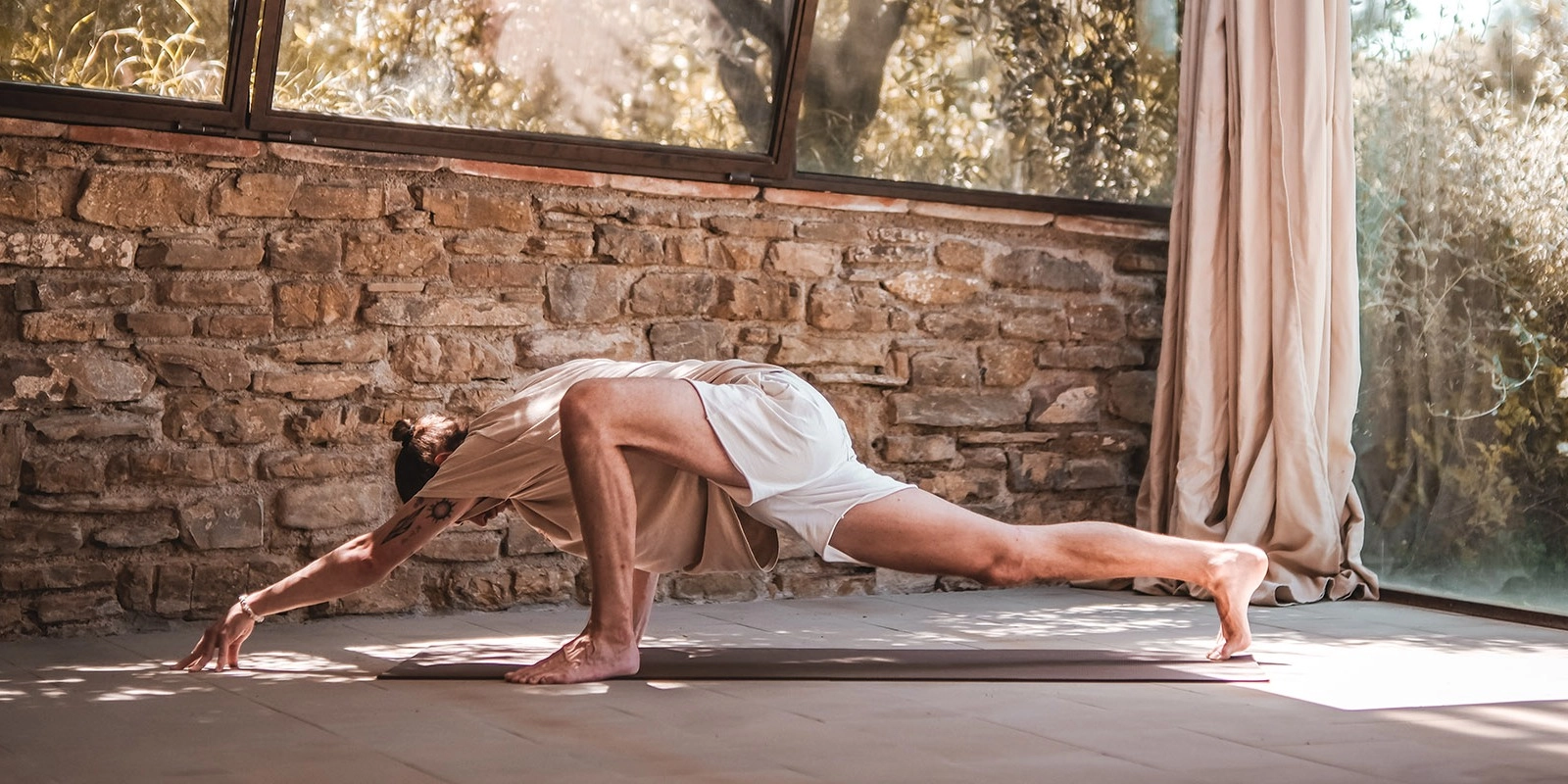
A Crescent Lunge isn’t just opening the hip flexors.
It’s asking the glutes, core and ankles to actively support the position.
That’s strength and mobility working together.
A Simple Weekly Framework
If you’re busy, here’s where I’d start.
Before Running
Keep things dynamic:
- Leg swings
- Hip circles
- Walking lunges
- Bodyweight squats
Five minutes is enough.
Avoid long static stretching before harder sessions.
After Running
This is where yoga shines.
Focus on:
- Hip mobility
- Calf release
- Hamstring recovery
- Breathwork
Ten to fifteen minutes can make a huge difference.
Strength Sessions
Aim for one to two sessions per week.
Prioritise:
- Single-leg work
- Glute strength
- Core stability
- Balance
You don’t need complicated programming.
You need consistency.
How Yoga Fits Into the Picture
At Unite Yoga, we don’t see yoga as separate from training.
We see it as part of training.
The best yoga for runners develops:
- Strength
- Mobility
- Stability
- Recovery
- Nervous system regulation
Breathwork plays a role too.
Many runners think of recovery purely in physical terms.
The nervous system recovers as well.
Learning how to down-regulate after hard training can be just as valuable as releasing a tight calf or hip flexor.
This is one reason yoga continues to complement running so effectively.
It works on the whole person.
Not just the muscles.
Practical Takeaways
- Strength and mobility are not competing priorities.
- Runners need both.
- Strength creates stability and resilience.
- Mobility creates freedom and efficiency.
- The most effective exercises often develop both simultaneously.
- Yoga sits naturally between strength and mobility.
- Consistency matters more than complexity.
- Ten to twenty minutes a few times per week is enough to create meaningful change.
Most importantly:
Stop asking which one matters more.
Start asking where your biggest limitation currently sits.
That’s usually where the opportunity is.
Frequently Asked Questions
Should runners focus on strength or mobility first?
Most runners benefit from improving both, but if you’re constantly injured or feeling unstable, strength is often the better starting point.
Is yoga enough for mobility training?
In many cases, yes. Especially when the practice includes active movement, balance work and end-range control.
Can strength training make runners less flexible?
Not when performed through a full range of motion. Many strength exercises actually improve mobility.
How often should runners do mobility work?
Two to three short sessions per week is enough for most runners.
Do I need a gym to build running strength?
No. Bodyweight exercises, yoga and simple resistance training can all be highly effective.
Not Sure Where to Start?
Every runner is different.
Some need more mobility.
Some need more strength.
Others simply need a routine they can stick to consistently.
That’s why we created our free Unite Yoga Class Finder.
Answer a few simple questions and we’ll recommend classes based on your goals, experience and current training needs.
Take the Free Unite Yoga Class Finder Quiz →
Recommended Classes
Power Flow – Hips & Core
A dynamic practice combining hip movement, strength and core stability. This directly supports the article’s message that runners need control, not just flexibility.
Power Flow – Core & Full Body Strength
A 30-minute strength-focused class with Dan designed to build heat, focus and full-body stability. Best suited to runners who need more strength alongside mobility.
Morning Movement – Wake Up Your Hips
A steady hip-focused flow that restores ease through the lower body. A softer counterpoint to the strength classes, helping runners build mobility they can actually use.
About the Author
Dan is co-founder of Unite Yoga and currently training towards a sub-3-hour marathon. Alongside teaching yoga professionally, he uses yoga, mobility work and strength training to support running performance, recovery and long-term resilience.
Further Reading
- Why Every Runner Needs Yoga
- Hip Mobility Exercises for Runners
- Marathon Training and Yoga
- Yoga Before Running
Looking for a Complete Guide to Yoga for Runners?
This article is part of our Yoga for Runners series, a collection of practical resources designed to help runners improve mobility, recover more effectively and build a sustainable training practice.
For a complete overview, including guidance on recovery, mobility, injury prevention, marathon training and class recommendations, visit our pillar guide:
👉 Yoga for Runners: The Complete Guide to Running Stronger, Recovering Better and Staying Injury-Free
You can also explore:
- Why Every Runner Needs Yoga
- Yoga Before Running
- Best Yoga Routine After a Long Run
- Recovery Day Yoga for Runners
- Yoga for Tight Calves After Running
- Yoga for Runners With Tight Hips
- Hip Mobility Exercises for Runners
- Strength vs Mobility for Runners
- Yoga for IT Band Pain
- Yoga for Shin Splints
- Marathon Training and Yoga
Leave a Reply